Stacker, Ship Loader, Eco Hopper, Reclaimer, Truck Unloader, Belt Conveyor Manufacturer

A well-designed ship loader system can dramatically improve loading efficiency, reduce environmental impact, and lower operational costs. SKE Industries can supply you complete mobile ship loader solution for your port.
In modern ports and bulk terminals, speed and efficiency are everything. Whether the cargo is coal, grain, iron ore, fertilizer, or aggregates, operators must move thousands of tons of bulk material onto vessels quickly while minimizing dust, spillage, and labor costs. This is where the bulk material ship loader plays a crucial role.
A well-designed ship loader system can dramatically improve loading efficiency, reduce environmental impact, and lower operational costs. In this article, we'll explore how bulk material ship loaders work, their key components, types, advantages, and how to choose the right ship loading conveyor system for ports and terminals.
A bulk material ship loader is a specialized material handling machine used to transfer bulk cargo from a port terminal onto ships. It is typically installed at seaports, river ports, and bulk terminals where materials such as coal, ore, grain, cement clinker, and aggregates must be loaded efficiently into cargo vessels.
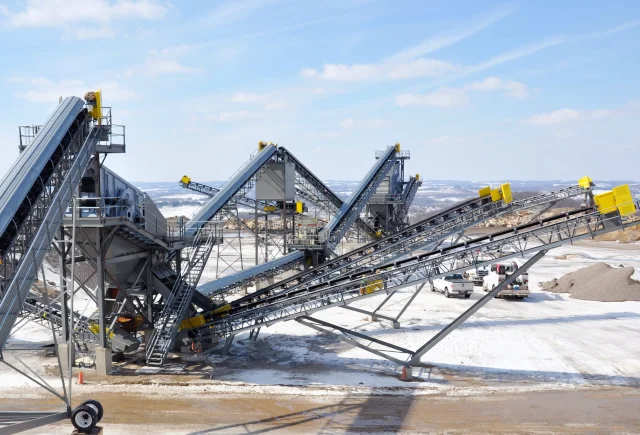
Most ship loaders are integrated with belt conveyor systems that transport material from stockpiles, silos, or storage yards directly to the vessel. The ship loader then distributes the material evenly inside the ship's cargo hold.
These machines are essential in modern ports because they help increase loading capacity while maintaining safe and environmentally controlled operations.

A typical bulk ship loading system works as part of a larger material handling process.
Here is the simplified workflow:
This system allows ports to handle high-capacity bulk cargo ship loading, often ranging from 500 TPH to over 6000 TPH depending on the terminal design.
Different ports require different loading solutions. The most common types of ship loading conveyors for bulk terminals include the following.
A fixed ship loader is permanently installed at a berth. It usually runs on rails along the quay and is designed for high-capacity operations.
Key features:
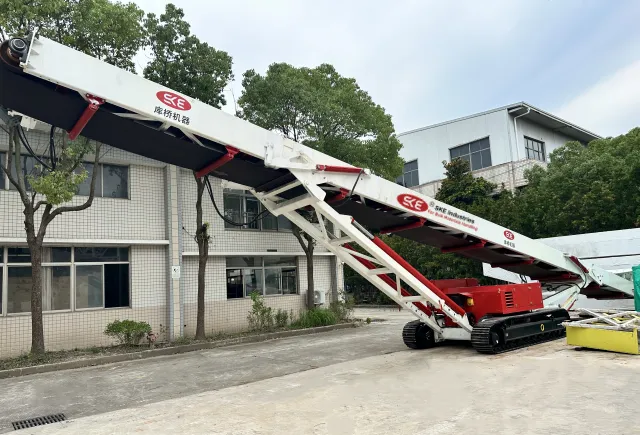
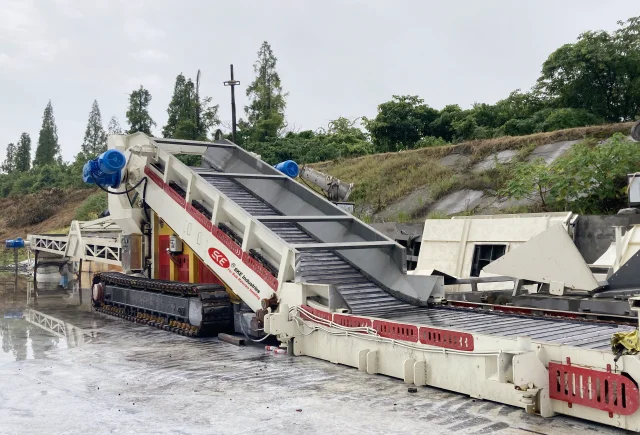
A mobile ship loader provides greater flexibility. It can be moved between berths or loading positions.
Advantages include:
A radial telescopic ship loader combines several movement functions such as slewing, luffing, and telescoping. This allows the boom to reach different areas inside the ship hold without repositioning the vessel.
Benefits:

A bulk material ship loader conveyor system consists of several critical components:
The boom conveyor transports bulk material from the feeding point to the discharge end. It is the main structural part of the ship loader.
The slewing system allows the boom to rotate horizontally, enabling the loader to reach different sections of the ship hold.
The luffing mechanism adjusts the vertical angle of the boom to match different vessel heights.
A telescopic loading chute for ship loading controls the material flow and minimizes dust emissions.
Rail-mounted or wheel-mounted travel systems allow the loader to move along the quay.
Modern port ship loading equipment offers numerous benefits for bulk cargo handling.
Ship loaders enable continuous bulk material loading, significantly increasing throughput compared to manual or crane-based loading methods.
Advanced ship loaders integrate dust suppression systems, enclosed conveyors, and telescopic loading chutes, improving environmental compliance.
Automated systems reduce manpower requirements and improve operational consistency.
Radial and telescopic movements allow materials to be evenly distributed inside the ship hold, reducing the need for trimming.
Ports equipped with high-capacity ship loading conveyor systems can handle larger vessels and more cargo, improving their competitiveness in global trade.
A bulk material ship loading system is widely used across multiple industries:
Because these industries handle large volumes of dry bulk materials, efficient ship loading equipment for bulk terminals is essential.

Selecting the correct ship loader for bulk material loading requires careful consideration of several factors.
Determine the required throughput in tons per hour (TPH).
Material characteristics such as particle size, moisture content, and dust generation will affect the design.
Different ships—such as Handysize, Panamax, or Capesize vessels—require different boom lengths and operating ranges.
The layout of the quay, conveyor system, and storage yard will determine the optimal ship loader configuration.
Dust control and noise reduction are increasingly important for port operations.
A bulk material ship loader for efficient port loading is a critical piece of equipment in modern bulk terminals. Whether handling coal, grain, ore, or aggregates, these machines ensure fast, safe, and environmentally responsible cargo transfer from shore to vessel.
By investing in the right ship loading conveyor system, ports and bulk material operators can improve loading capacity, reduce operational costs, and enhance their competitiveness in global logistics.
As international trade continues to grow, the demand for high-capacity, flexible, and automated ship loaders for bulk materials will continue to rise, making them an essential component of future port infrastructure.