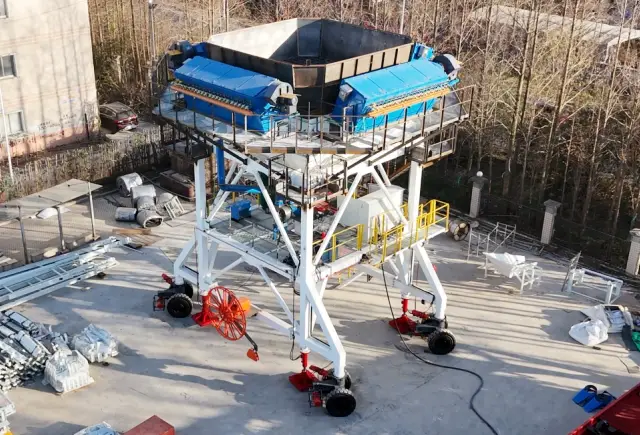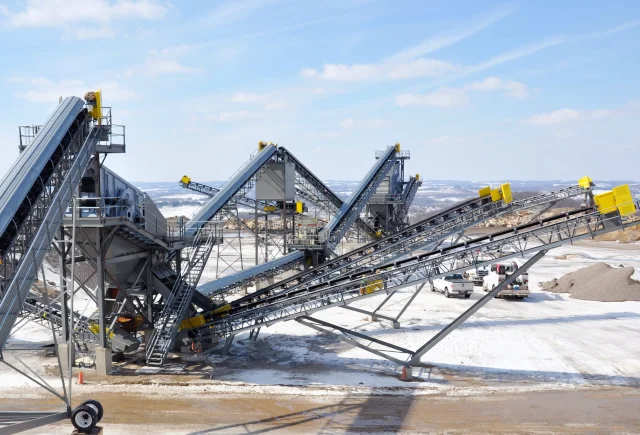
Stacker, Ship Loader, Eco Hopper, Reclaimer, Truck Unloader, Belt Conveyor Manufacturer

Bulk material handling operations depend heavily on efficient stockpiling systems. In this article, we will explore how radial telescopic conveyors work, their advantages, applications, design considerations.
bulk material handling operations depend heavily on efficient stockpiling systems. Whether in mining, aggregates, ports, or agriculture, the ability to stack large volumes of materials quickly and efficiently directly affects productivity and operating costs. Traditional fixed conveyors can handle material transport effectively, but they often fall short when it comes to building large and well-managed stockpiles.
This is where the radial telescopic conveyor for bulk material stacking becomes an ideal solution. By combining radial movement with telescopic extension, this type of conveyor provides unmatched flexibility, improved stockpile management, and reduced operational costs.
In this article, we will explore how radial telescopic conveyors work, their advantages, applications, design considerations, and why they are becoming a preferred stockpiling solution in modern bulk handling systems.
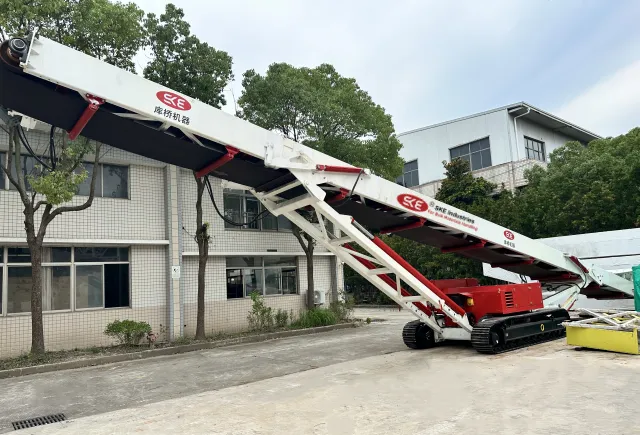
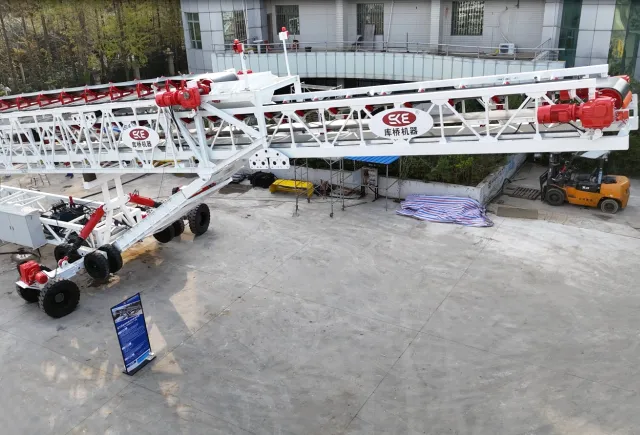
A radial telescopic conveyor is a specialized belt conveyor designed to stack bulk materials over a large area without the need to frequently reposition the equipment. It integrates two key movements:
This combination allows the conveyor to create large, evenly distributed stockpiles while minimizing material handling steps.
Radial telescopic conveyors are widely used for handling bulk materials such as:
Because of their flexibility and efficiency, these conveyors are commonly installed in quarries, mines, ports, terminals, cement plants, and agricultural facilities.
A radial telescopic conveyor system combines multiple mechanical movements to achieve efficient bulk material stacking.
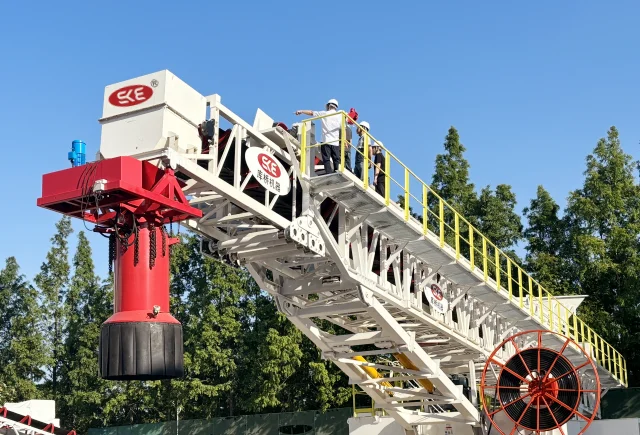
The entire conveyor rotates around a pivot point located at the base of the structure. This movement allows the conveyor to cover a large circular or semi-circular stacking area.
Instead of building a narrow pile in a single location, the conveyor distributes material across a wider footprint, creating large stockpiles with minimal equipment repositioning.
The telescopic boom is designed to slide forward and backward along the conveyor frame. By extending the conveyor, the discharge point moves farther from the pivot, allowing the formation of larger stockpiles.
Retracting the boom allows operators to build the stockpile from the center outward, helping maintain a stable pile shape and reducing excessive drop heights.
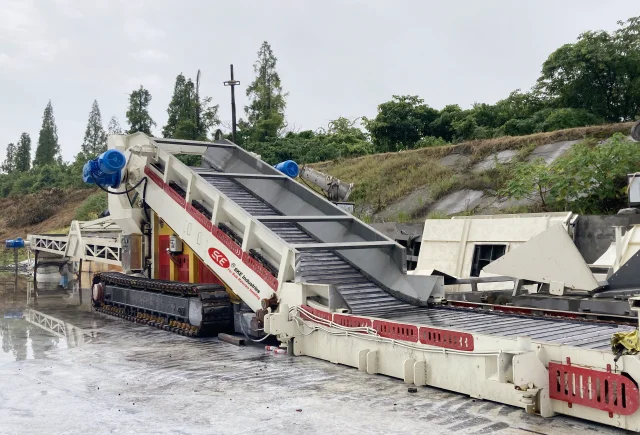
The conveyor belt transports material from upstream equipment—such as crushers, screens, truck unloaders, or transfer conveyors—to the discharge point at the end of the boom.
As the conveyor rotates and extends, material is continuously layered across the stockpile, producing a more uniform pile structure.
Radial telescopic conveyors offer several operational advantages that make them highly attractive for bulk material stacking.
The combination of radial rotation and telescopic extension enables the conveyor to cover a significantly larger stacking area compared with conventional fixed conveyors. This allows facilities to build larger stockpiles without relocating the conveyor system.
Material segregation is a common issue in stockpiling, especially when materials are dropped from a fixed high discharge point. Larger particles tend to roll down the pile while smaller particles accumulate near the center.
The telescopic function allows the discharge point to move closer to the pile surface, reducing drop height and helping maintain a more uniform particle distribution.
Using a radial telescopic conveyor reduces the need for additional stacking equipment such as wheel loaders or dozers. Since the conveyor automatically distributes material across the stockpile, operators can minimize manual material movement.
This leads to:
Stockyards and storage areas often have limited space. Radial telescopic conveyors create wide circular or crescent-shaped stockpiles, allowing facilities to store more material within the same yard area.
Efficient yard utilization is especially important in ports and industrial plants where space is expensive.
Radial telescopic conveyors can handle a wide variety of materials, from fine powders to coarse aggregates. Operators can adjust the conveyor length and radial position to accommodate different materials and stacking requirements.
This flexibility makes the equipment suitable for multi-product terminals and processing plants.
Radial telescopic conveyors are widely used in industries that handle large volumes of bulk materials.
In mining and aggregate production, these radial telescopic stacker conveyors are commonly used to stack materials such as:
By building large stockpiles directly from the processing plant, operators can maintain a continuous production flow while ensuring sufficient material storage.
Ports and bulk cargo terminals frequently use radial telescopic conveyors for stockpiling materials before ship loading. This mobile radial telescopic conveyor can work as mobile ship loader in ports and in-land terminals.
Common cargoes include:
The flexibility of the conveyor allows terminals to efficiently manage multiple cargo types.
Grain storage facilities often use radial telescopic conveyors to build uniform grain piles. The telescopic boom helps reduce grain damage by minimizing drop height during stacking.
Radial telescopic conveyors are also used in biomass plants and recycling centers to stack materials such as:
The adjustable discharge point helps manage irregular or lightweight materials.
Selecting the right radial telescopic conveyor requires careful consideration of several technical parameters.
Typical conveyor lengths range from 20 meters to more than 60 meters, depending on the required stacking radius.
The capacity of the conveyor must match the upstream production equipment. Bulk handling systems may require capacities ranging from 100 TPH to over 3000 TPH.
Important factors include:
These characteristics influence belt speed, belt width, and chute design.
Radial telescopic conveyors can be designed in several configurations:
Each configuration offers different levels of mobility and flexibility.
For dusty materials such as coal or cement clinker, dust suppression or containment systems may be required to reduce environmental impact.
Bulk material handling technology continues to evolve, and radial telescopic conveyors are becoming increasingly advanced.
New systems often include:
These improvements help companies increase operational efficiency while meeting environmental and safety regulations.
A radial telescopic conveyor for bulk material stacking is one of the most efficient and flexible solutions for building large stockpiles in modern bulk material handling systems. By combining radial rotation with telescopic extension, the conveyor can distribute materials across a wide area, reduce material segregation, and minimize operating costs.
Industries such as mining, aggregates, ports, agriculture, and biomass processing rely on these conveyors to improve productivity and optimize storage space.
As demand for efficient bulk handling systems continues to grow, radial telescopic conveyors will remain a key technology for companies seeking reliable and cost-effective stockpiling solutions.