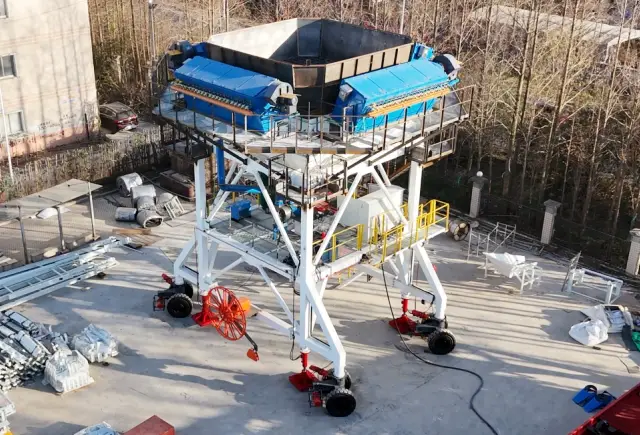
Stacker, Ship Loader, Eco Hopper, Reclaimer, Truck Unloader, Belt Conveyor Manufacturer

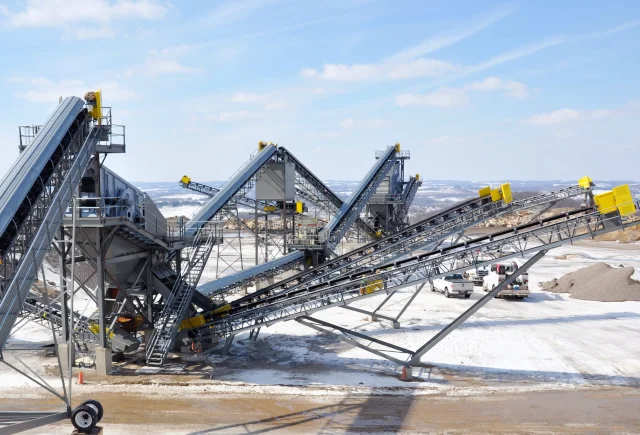
Troughing idlers are found in almost every type of bulk material handling system, from conventional fixed conveyors in aggregate plants to mobile conveyors.
A trough idler conveyor is one of the most common arrangements used for transporting bulk materials on a belt conveyor. Although the term is sometimes used to describe the entire conveyor, the more precise engineering term is a troughing idler conveyor system—a belt conveyor equipped with troughing idler sets that form the belt into a concave carrying profile.
This simple arrangement has a major influence on conveyor performance. By supporting the belt in a trough shape, the idlers allow the conveyor to carry a larger cross-sectional load than a flat belt while helping contain the material on the belt.
Troughing idlers are found in almost every type of bulk material handling system, from conventional fixed conveyors in aggregate plants to mobile conveyors working on temporary sites and large ship loaders operating in ports.
However, the requirements are not exactly the same in each application. A fixed conveyor may prioritize long service life and low maintenance, while a mobile conveyor has to deal with vibration, relocation, and changing operating conditions. A ship loader, meanwhile, may combine long conveyor lengths, high capacities, marine corrosion, frequent operation, and limited access for maintenance.
Understanding these differences is important when selecting a trough idler conveyor system.
A trough idler conveyor uses multiple rollers arranged at an angle to form the carrying side of the conveyor belt into a trough.
A typical troughing idler set consists of:
The side rollers are inclined upward from the center, creating the characteristic trough profile.
Common trough angles include:
A 35° trough angle is widely used in bulk material handling because it provides a useful balance between carrying capacity, belt support, material containment, and conveyor stability.
The exact angle, however, should be selected according to the belt width, material characteristics, conveyor capacity, belt flexibility, and operating conditions.

The main reason for using a troughing idler arrangement is to increase the effective carrying cross-section of the belt.
A flat belt can carry bulk material, but the material naturally spreads sideways and may have a relatively shallow loading profile.
When the belt is supported in a trough, the material is contained more effectively.
This provides several advantages:
For high-capacity bulk material conveyors, these advantages become particularly important.
A 1,200 mm belt carrying crushed stone, coal, iron ore, grain, or another bulk material can transport significantly more material when properly troughed than when operated as a simple flat belt.
Although the idlers are the focus of this type of conveyor, their performance depends on the entire conveyor system.
A typical trough idler conveyor includes:
The troughing idlers therefore form one part of a larger mechanical system. Their design must be compatible with the belt, pulleys, loading arrangement, and drive system.
The most common application is the conventional fixed belt conveyor.
These conveyors are used in:
A fixed conveyor normally has a relatively stable operating geometry. Once installed, the idler spacing, conveyor inclination, belt loading points, and supporting structure remain largely unchanged.
This makes it possible to optimize the trough idler system for a specific operating condition.
As conveyor capacity increases, the load carried by each idler set also increases. For example, a conveyor handling several thousand tons per hour may carry substantial material weight on every meter of belt.
The troughing idlers must therefore provide adequate:
Idler spacing may also need to be reduced around loading zones where impact and belt deflection are greater. This is one reason why a conveyor should not use the same idler arrangement throughout its entire length without considering the loading conditions.
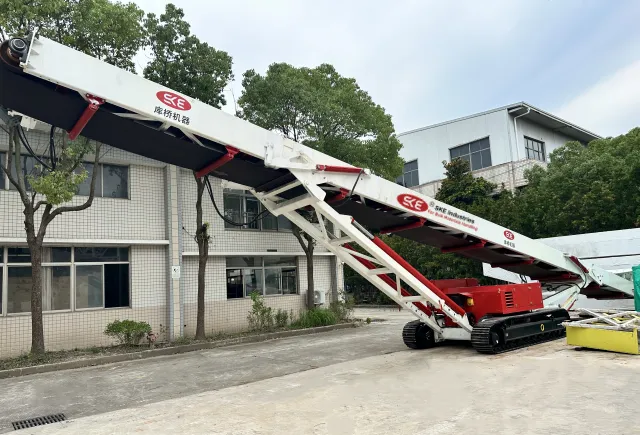
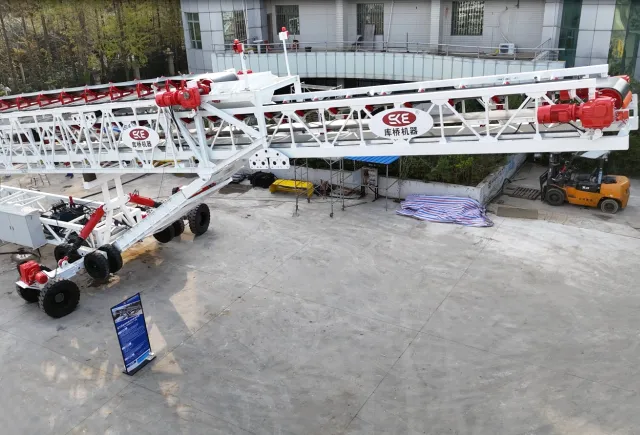
The requirements change when trough idlers are installed on a mobile conveyor. A mobile conveyor may be:
Unlike a fixed conveyor, a mobile conveyor may experience movement, vibration, uneven ground, frequent setup changes, and transport-related mechanical loads. The troughing idler system must therefore be designed with mobility in mind.
A mobile conveyor may travel across a stockyard or construction site rather than remaining permanently fixed. Changes in ground conditions can produce vibration through the conveyor structure.
If the supporting frame flexes or vibrates excessively, the idlers may experience additional dynamic loading. The result can be:
For this reason, mobile conveyor idlers need appropriate mechanical robustness rather than simply being selected according to static belt load.

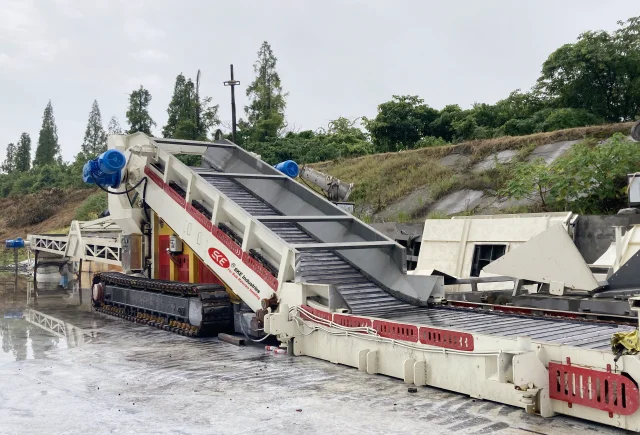
tracked conveyors are particularly demanding because the conveyor itself may move over crawler tracks.
The machine can experience:
The idler frame must therefore maintain proper alignment while the machine is moving.
Bearing sealing is also important because tracked conveyors often operate in dusty and outdoor environments.
For a tracked conveyor, a good troughing idler should combine:
load capacity + sealing + alignment + impact resistance + vibration tolerance rather than focusing on bearing capacity alone.
Radial stackers are another important mobile conveyor application. A radial stacker moves around a pivot point while the conveyor boom rotates through an arc. The conveyor structure may experience changing loads as the machine moves. Troughing idlers must continue to support the belt correctly throughout the operating range.
Particular attention should be paid to:
For radial equipment, belt tracking is particularly important because correcting a tracking problem on a moving machine can be more difficult than on a fixed conveyor.

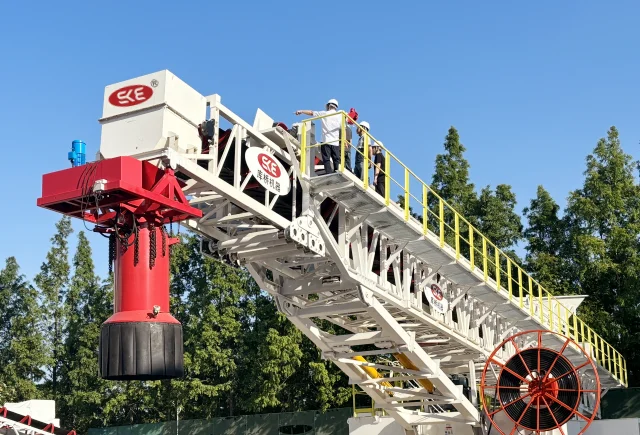
Ship loaders represent one of the more demanding applications for troughing idlers. A ship loader may transport thousands of tons of bulk material per hour from a shore-side conveyor system to a vessel. Depending on the design, the conveyor may extend through a long boom and operate over the water.
Typical materials include:
The trough idler system must operate reliably while exposed to:
This combination makes idler quality particularly important.
Maintenance access on a ship loader can be difficult. An idler located several tens of meters above the ground or over the water is not as easy to replace as an idler on a ground-level conveyor.
A failed roller can create several problems. A seized roller may generate excessive friction and heat. A damaged bearing can cause the roller to stop rotating. A damaged shell can affect the belt surface.
If the problem is not detected early, it can potentially damage the conveyor belt. The cost is therefore not limited to replacing one idler.
It may also include:
For ship loaders, reliability should therefore be considered from a lifecycle perspective.

Marine corrosion is another major consideration. A ship loader idler may be exposed to salt-laden air for years.
Important corrosion protection measures can include:
The idler's internal bearing protection is particularly important. A well-painted roller shell does not compensate for poor bearing sealing. If water or salt contamination reaches the bearing, the idler may fail long before the external coating shows obvious deterioration.
Idlers continuously rotate while the conveyor operates. A conveyor may contain hundreds or thousands of rollers depending on its length. Even a small increase in rolling resistance can therefore become significant when multiplied across the entire conveyor.
Low-resistance idlers can help reduce:
This is particularly relevant for long overland conveyors and ship loaders. However, low rolling resistance should not be achieved by compromising bearing capacity or sealing performance. The objective is a balanced design.
The selection approach should change according to the application.
Prioritize:
Prioritize:
Prioritize:
This is why there is no single "best" trough idler for every conveyor. The best idler is the one designed for the actual operating environment.
Several recurring problems can usually be traced back to idler quality, installation, or selection.
A seized bearing prevents the roller from rotating normally.
Possible causes include:
Misaligned idlers can cause the belt to move sideways.
Potential causes include:
Unusual noise can indicate:
A damaged or seized roller can create localized friction against the belt. This can accelerate belt wear and, in severe cases, damage the belt. Regular inspection is therefore an important part of conveyor maintenance.
A trough idler conveyor is a belt conveyor that uses angled idler rollers to form the carrying side of the belt into a trough. This allows the conveyor to carry bulk materials more efficiently than a flat belt.
Common trough angles include 20°, 30°, 35°, and 45°. The appropriate angle depends on belt width, material characteristics, capacity, and belt flexibility.
Troughing idlers are widely used in fixed belt conveyors, mobile conveyors, tracked conveyors, radial stackers, ship loaders, mining conveyors, quarry conveyors, grain conveyors, and other bulk material handling systems.
They can be. Mobile conveyors experience vibration and dynamic loads that may require stronger idler frames, robust bearings, better sealing, and closer attention to belt tracking.
Ship loaders often operate continuously in dusty and corrosive marine environments, and idler replacement can be difficult. Reliable bearings, effective seals, corrosion protection, and low rolling resistance are therefore particularly important.
Inspection frequency depends on conveyor duty, operating hours, material, environment, and maintenance strategy. High-capacity mobile conveyors and ship loaders generally require more systematic inspection because an idler failure can have significant operational consequences.