Stacker, Ship Loader, Eco Hopper, Reclaimer, Truck Unloader, Belt Conveyor Manufacturer

A modern aggregate ship-loading system minimizes handling cost, shortens vessel turnaround time, and reduces environmental impact. SKE Industries provide mobile ship loader conveyor for aggregate handling.
Efficient bulk material loading plays a crucial role in the global movement of construction materials. As demand grows across infrastructure, cement production, and coastal development, ports and terminals are increasingly relying on aggregate loading conveyors to streamline the transfer of crushed stone, gravel, limestone, and construction aggregates into ships and barges.
A modern aggregate ship-loading system minimizes handling cost, shortens vessel turnaround time, and reduces environmental impact—making it an essential component for high-volume export operations.
Traditionally, aggregate loading relied on wheel loaders, trucks, or grab cranes. While functional, these methods are slow, labor-intensive, and prone to spillage and dust emission.
In contrast, belt conveyors designed for ship loading offer:
These benefits make conveyors the preferred solution for modern ports and aggregate exporters.
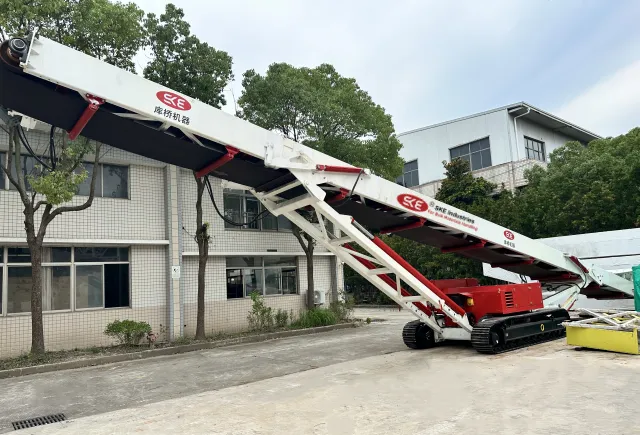
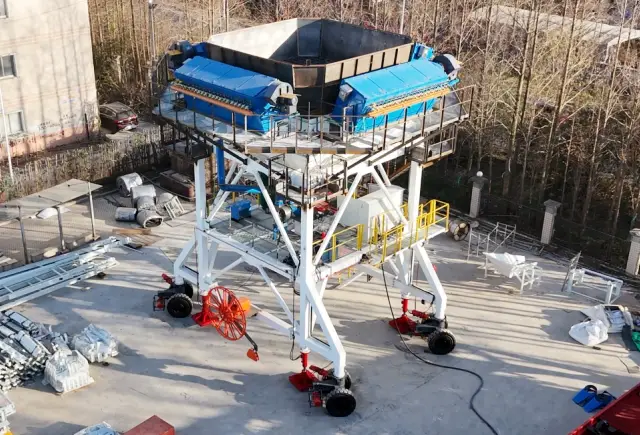
Mobile units are mounted on wheels or tracks and can be moved between berths or barge positions. They require minimal civil work and can be set up quickly.
Key applications:
These loaders provide extended reach and radial movement, allowing operators to load multiple holds without repositioning the vessel.
Advantages:
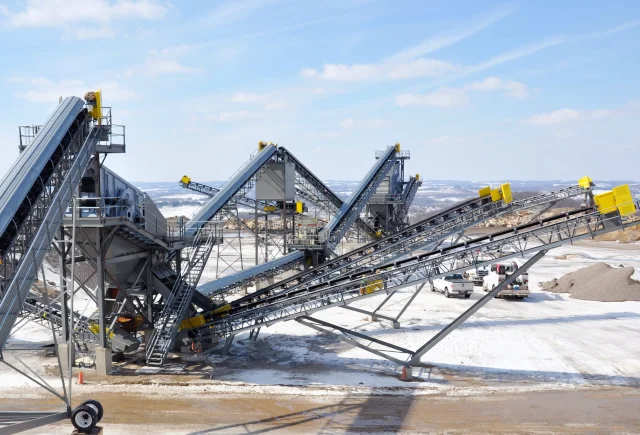
Permanent systems designed for high-volume export facilities. They connect directly to quarries, crushing plants, or storage silos.
Ideal for:

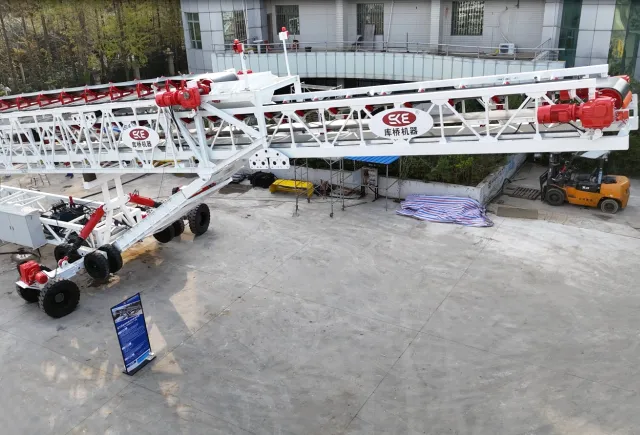
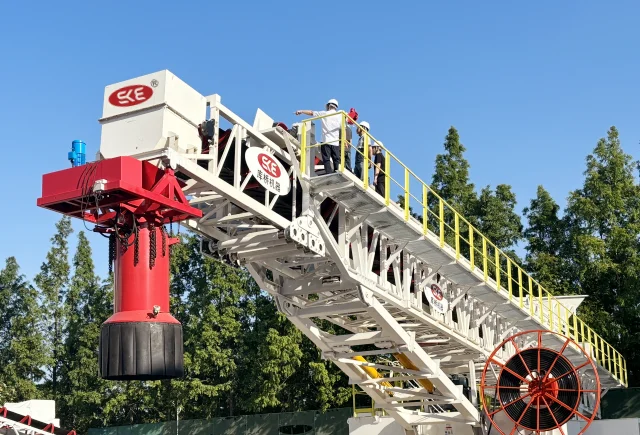
Telescopic ship loader Fed By truck unloader or grasshopper conveyor or Fixed belt conveyor System

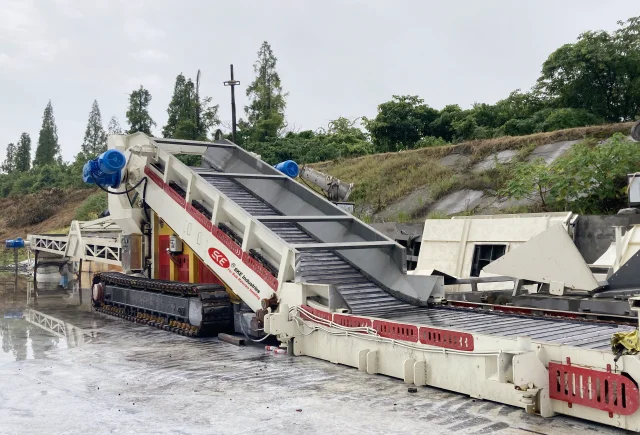
Ship Loader, Fed by Dump truck or Wheel Loader or Crane Grab

Direct Feed Ship Loader Fed By Wheel Loader or Crane Grab

Direct Feed Ship Loader with Low Feed Height Fed By Wheel Loader or Crane Grab
Aggregates are coarse, abrasive, and dense. Therefore, ship loaders use:
Conveyors often include:
Ports increasingly face environmental regulations. Aggregate conveyors typically include:
These features minimize pollution and keep the port area safe and clean.
Conveyors can be fed by:
This adaptability allows integration into almost any port configuration.
| Specification | Range |
| Capacity | 1,000–3,500+ TPH |
| Belt width | 800–2000 mm |
| Conveyor length | 30–60+ m |
| Discharge height | 8–20 m |
| Mobility | Fixed, wheeled, tracked, or rail-mounted |
| Power | Electric or diesel-electric |
Aggregate loading conveyors are widely used in:
Their versatility makes them suitable for both small regional ports and major international terminals.
As global demand for construction aggregates continues to rise, efficient ship loading systems are becoming indispensable. Aggregate loading conveyors deliver unparalleled reliability, capacity, and environmental performance. Whether deployed as mobile ship loaders or integrated into large fixed terminals, these systems provide a cost-effective, high-speed solution for modern bulk material handling.