Stacker, Ship Loader, Eco Hopper, Reclaimer, Truck Unloader, Belt Conveyor Manufacturer

Selecting the right mobile system for a radial stacker is an important part of equipment design.
Selecting the right mobile system for a radial stacker is an important part of equipment design. The mobility system determines how easily the radial stacker can move, how often it can be relocated, what type of ground it can operate on, and how much infrastructure is required at the stockyard.
A radial stacker may have the required conveying capacity and stacking radius, but if its mobile system is not correctly selected, relocation can become difficult, operating costs can increase, and the equipment may not perform efficiently at the site.
For this reason, mobile system selection of a radial stacker should be based on the actual site conditions, relocation frequency, ground conditions, transport requirements, and operating method.
The mobile system is the mechanism that allows a radial stacker to move around its operating area.
Depending on the design, a radial stacker can use different mobility configurations, such as:
For most mobile radial stacker applications, the key selection is between a wheel-mounted system and a tracked system.
The correct choice depends more on operating conditions than on conveying capacity.

The mobile system directly affects the radial stacker's:
A mobile system that is too simple may not provide sufficient mobility.
A system that is unnecessarily heavy or complex can increase purchase, maintenance, and transportation costs.
Therefore, the objective is to select the simplest mobile system that can reliably meet the actual operating requirements.
If the radial stacker moves only occasionally, such as when a stockpile is completed, a relatively simple wheel-mounted system may be sufficient.
The equipment can be repositioned using its own travel system or external assistance, depending on the design.
If the stacker needs to move regularly between different stockpile positions, the mobile system should provide reliable self-propelled movement.
Important considerations include:
For applications where the stacker moves frequently during daily operation, mobility becomes one of the primary design considerations.
The system may require:
In this situation, the mobile system should be designed around the relocation process rather than added as an auxiliary feature.
Ground conditions are one of the most important factors in mobile system selection.
Before choosing wheels or tracks, evaluate:
A mobile radial stacker transfers its operating weight to the ground through its wheels or tracks.
If the ground cannot provide sufficient support, the machine may experience:
Therefore, the mobility system and site civil works should be considered together.
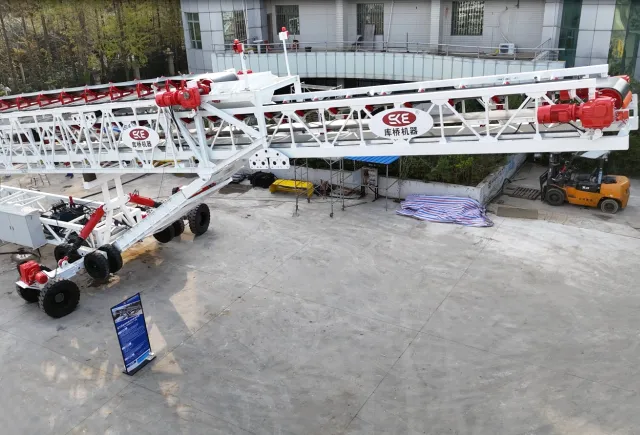
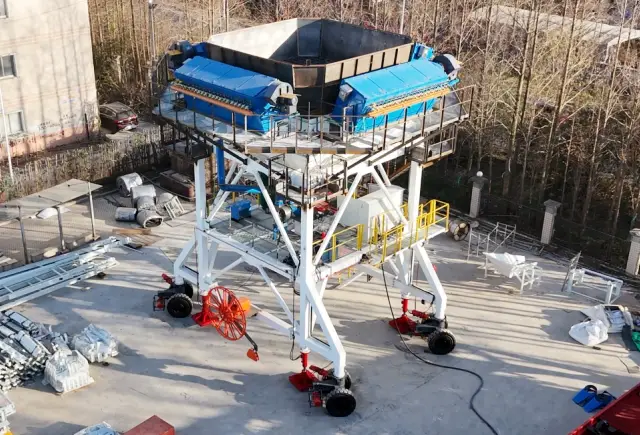
A wheel-mounted mobile system is often suitable when the radial stacker operates on a prepared and relatively stable surface.
A wheel-mounted system is generally appropriate when:
A wheel-based system can provide:
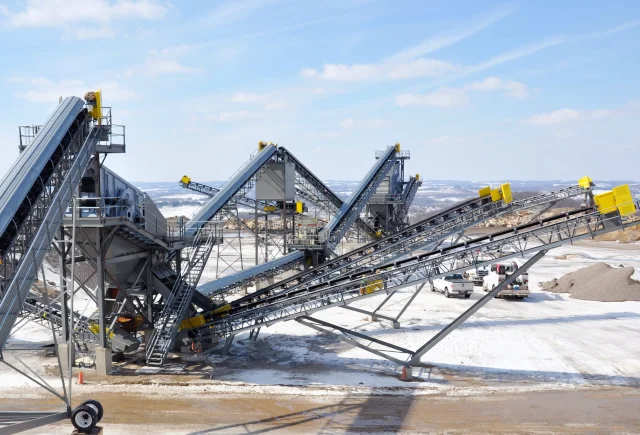
For established aggregate yards and prepared bulk material stockyards, wheels can provide a practical mobility solution.
Wheel-mounted systems are more sensitive to:
If these conditions exist, a tracked system may be more appropriate.
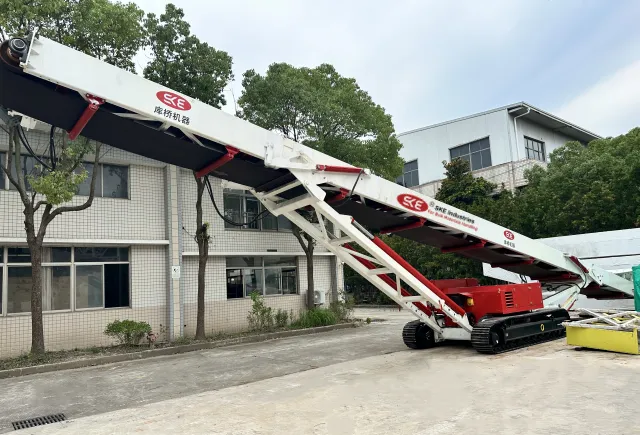
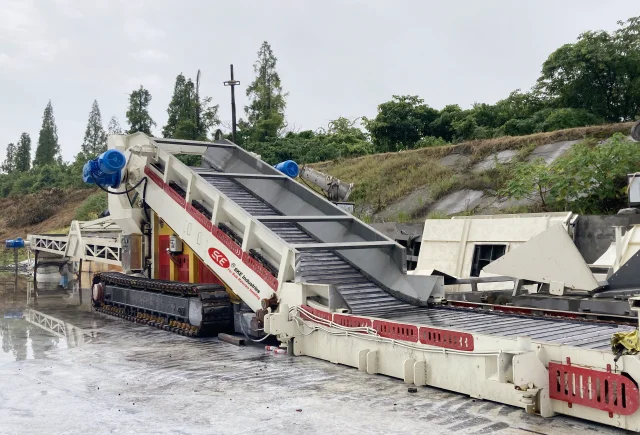
A tracked mobile system uses crawler tracks to distribute the machine's weight over a larger contact area.
This can provide better mobility on challenging surfaces.
A tracked system should be considered when:
A tracked radial stacker can provide:
Tracked systems can involve:
Therefore, tracks should not automatically be selected simply because they provide greater mobility.
If the site already has a strong and well-prepared surface, a wheel-mounted system may provide a more economical solution.

The selection should be based on actual requirements.
| Selection Factor | Wheel-Mounted | Tracked |
| Prepared ground | Excellent | Excellent |
| Uneven ground | Moderate | Better |
| Soft ground | Limited | Better |
| Ground pressure | Higher | Lower |
| Traction | Good | Excellent |
| Maintenance | Simpler | More complex |
| Initial cost | Generally lower | Generally higher |
| Transportation | Convenient | Depends on design |
| Frequent relocation | Good | Excellent |
| Rough operating conditions | Limited | Better |
There is no universally better solution.
The correct choice is the one that matches the actual operating environment.
Ground bearing pressure is an important technical parameter when selecting the mobile system. For a wheel-mounted system, the machine's weight is concentrated over relatively small contact areas.
A tracked system distributes the load across a larger contact area.
This can be important when the radial stacker operates on:
The required ground bearing pressure should be calculated according to the actual machine weight and site conditions.
The manufacturer can then determine the appropriate wheel or track configuration.
Travel speed should be determined by the relocation requirements.
A radial stacker does not normally need high travel speed during stockpile operation.
Instead, the important requirements are:
If the equipment needs to move between stockpiles frequently, a higher travel speed can reduce relocation time.
However, excessive speed can increase:
Therefore, travel speed should be optimized for the actual operating procedure.
The mobile system needs sufficient drive torque to move the radial stacker safely.
Travel drive selection depends on:
Electric and hydraulic travel drives are both possible depending on the radial stacker design.
The drive system should provide sufficient starting torque, especially when the equipment needs to start on a slope or under unfavorable ground conditions.
Site slope can significantly influence mobile system selection.
A radial stacker operating on a level stockyard has different mobility requirements from one operating on sloped ground.
When evaluating slope, consider:
The mobile system should be capable of maintaining controlled movement and stopping safely under the specified site conditions.
The maximum allowable slope should be determined by the equipment manufacturer rather than assumed from the wheel or track type alone.
There are several ways to relocate a radial stacker.
The intended relocation method should therefore be established before finalizing the mobile system.
Operating mobility and transportation mobility are not the same thing.
A radial stacker may move easily around its stockyard but still be difficult to transport between sites.
Check:
For portable projects, transportation requirements should be included in the mobile system selection from the beginning.
The stockyard layout determines how the radial stacker needs to move.
Consider:A mobile system should allow the radial stacker to reach all required stockpile positions without unnecessary relocation.
The travel path should also remain clear of:
A detailed site layout is therefore highly recommended before selecting the mobile configuration.
Mobile system selection should not be based solely on initial purchase price.
Consider the total lifecycle cost:
Initial Cost + Operating Cost + Maintenance Cost + Relocation Cost + Transportation Cost
For example, a tracked system may have a higher initial cost but provide lower relocation effort on a challenging site.
Conversely, a wheel-mounted system may provide lower total cost when the site has good roads and prepared surfaces.
The most economical solution is therefore not necessarily the system with the lowest purchase price.
The mobile system contains components that experience continuous mechanical loading.
For wheel-mounted systems, maintenance may include:
For tracked systems, maintenance may include:
If the project operates in remote areas, spare parts availability and maintenance capability should also be considered.
Environmental conditions can affect mobile system performance.
Consider:For coastal applications, corrosion protection should be applied to the mobile structure and exposed components.
For dusty environments, travel drives, bearings, and other moving components should have suitable sealing and protection.
The mobile system must be designed for the complete radial stacker.
Important parameters include:
A larger radial stacker generally requires a stronger and more capable mobile system. The wheel or track arrangement must provide sufficient stability during operation and relocation.
A practical selection process can be completed in the following order.
Determine whether the stacker will operate on:
Check:
Define whether the stacker moves:
Determine whether the stacker will be:
Select the simplest system that meets the actual mobility requirements.
Verify:
Confirm:
Compare:

Before selecting the mobile system, the following information should be confirmed:
The mobile system selection of a radial stacker should be based primarily on how the equipment will move, where it will operate, and how frequently it will be relocated.
For prepared and stable stockyards, a wheel-mounted mobile system can provide a simple and economical solution. For sites with lower ground bearing capacity, uneven surfaces, higher traction requirements, or frequent relocation, a tracked mobile system may be more suitable.
The key is not to select the most powerful or most complex mobility system. Instead, the objective should be to select the most appropriate mobile system for the actual site and operating conditions.
A correct selection should balance mobility, ground pressure, travel performance, transportation requirements, maintenance, and lifecycle cost. When these factors are evaluated together, the radial stacker can achieve reliable movement and efficient stockpile operation without unnecessary investment.
Ground conditions and relocation frequency are two of the most important factors. They determine whether a wheel-mounted or tracked system is more appropriate.
Neither is universally better. Wheel-mounted systems are generally suitable for prepared surfaces, while tracked systems provide advantages where traction, lower ground pressure, and mobility on uneven surfaces are important.
A tracked system should be considered when the radial stacker operates on less-prepared ground, requires greater traction, or needs frequent relocation within the stockyard.
The manufacturer should know the machine weight, ground conditions, site slope, relocation frequency, travel distance, required travel speed, transportation requirements, and operating environment.
Yes. The mobility configuration affects the initial investment, drive system, maintenance, transportation, and long-term operating costs. The most economical solution should be evaluated based on total lifecycle cost rather than purchase price alone.