Stacker, Ship Loader, Eco Hopper, Reclaimer, Truck Unloader, Belt Conveyor Manufacturer
Pubdate:08-11-2026 Views:36541
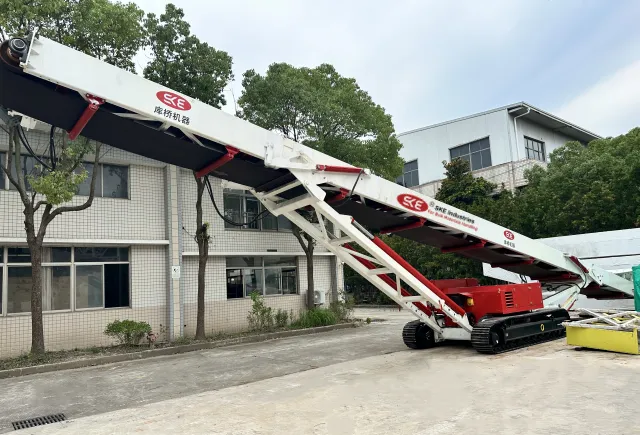
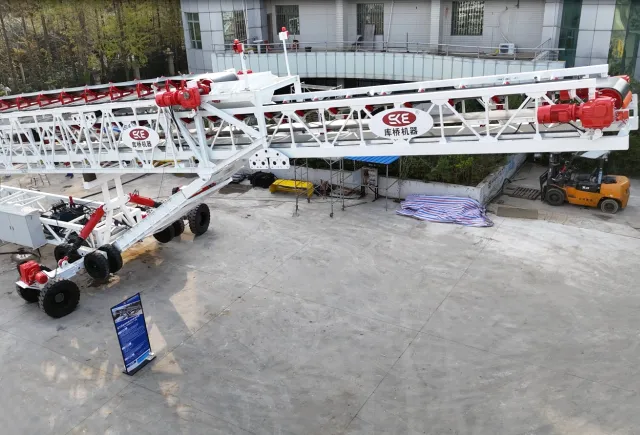
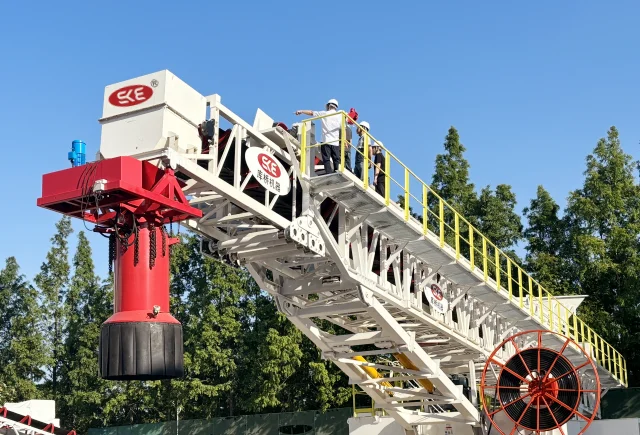
A ship loader is a large piece of bulk material handling equipment that operates in demanding environments such as ports, export terminals, mining facilities, grain terminals, cement plants, and power stations. Because ship loaders are often exposed to rain, humidity, salt spray, dust, sunlight, and temperature changes, Coating is an important part of the equipment's corrosion protection system.
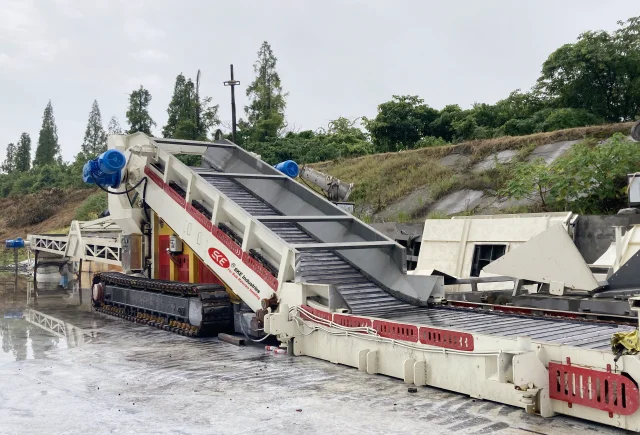
For this reason, painting a ship loader is not simply a matter of appearance. A properly selected and applied ship loader Coating and coating system helps protect structural steel, extend equipment service life, reduce maintenance requirements, and maintain reliable operation in harsh port environments. We provide high-quality coating treatment not only for large structures, but also for components such as conveyor idlers and idler brackets and more.
This article explains why Coating is important for ship loaders and what factors should be considered when selecting a protective coating system.
Most ship loaders are manufactured primarily from carbon steel. Although carbon steel provides excellent strength and cost-effectiveness, it is susceptible to corrosion when exposed to water, oxygen, salt, and other environmental contaminants.
A ship loader may operate for decades. During this period, its structural steel can be exposed to:
Without an appropriate protective coating, corrosion can gradually develop on the steel surface. Therefore, a suitable ship loader painting system acts as a protective barrier between the steel structure and the surrounding environment.
The most important function of Coating is corrosion protection.
When bare steel comes into contact with moisture and oxygen, an electro chemical reaction can produce rust. In coastal environments, chloride from salt spray can accelerate this process significantly.
A properly designed coating system separates the steel from the external environment and slows down corrosion.
For large bulk material ship loaders, this protection is particularly important for:
Preventing corrosion at an early stage is much more economical than repairing heavily corroded steel later.
Many ship loaders are installed in coastal ports. Marine environments are significantly more demanding than normal inland industrial environments.
Salt-laden air can deposit chloride onto steel surfaces. When combined with moisture, this can accelerate corrosion around:
This is why ship loaders operating at seaports generally require a higher-performance coating system than equipment operating in a dry indoor environment.
The coating specification should be selected according to the actual environmental conditions and the required service life.
A ship loader is a major capital investment. Depending on the application, the equipment may be expected to operate for 20 years or more.
Corrosion can gradually reduce the thickness of structural steel. If corrosion becomes severe, components may require:
A high-quality coating system can significantly slow down this process. The result is a longer service life and better protection of the original equipment investment.
Corrosion maintenance can become expensive, particularly for large ship loaders. Repairing a coating system is usually much less expensive than repairing structural steel that has already suffered serious corrosion.
A preventive coating strategy can reduce:
For large port equipment, reducing maintenance downtime can be particularly valuable because an unavailable ship loader can affect the entire vessel loading operation.
Ship loaders installed outdoors are continuously exposed to sunlight.
UV radiation can degrade certain coating materials over time, causing:
For this reason, many ship loader coating systems use a weather-resistant polyurethane or similar finish coat.
The topcoat provides additional protection against:
It also helps maintain the visual appearance of the equipment.
Bulk material ship loaders may handle coal, iron ore, limestone, cement, clinker, grain, fertilizer, and other materials. Fine dust can accumulate on steel structures and equipment surfaces. Depending on the material, dust can absorb moisture or contain chemically active substances that contribute to corrosion.
A properly selected coating helps protect steel surfaces from this environment.
For dusty bulk handling applications, the coating system should therefore consider both the atmospheric environment and the characteristics of the handled material.
Although corrosion protection is the primary purpose of industrial paint, appearance is also important. A well-painted ship loader presents a professional appearance at the port and can reinforce the equipment owner's or manufacturer's brand identity.
Consistent colors can also make it easier to identify:
Many projects specify colors according to the RAL color system or a customer's own corporate color requirements.
Color selection can contribute to equipment safety.
High-visibility colors can make structural components and access areas easier for operators and maintenance personnel to identify, particularly in large terminals.
For example, contrasting colors may be used for:
The exact color scheme should follow the project's safety requirements and applicable local standards.
A professional ship loader coating system normally consists of multiple layers rather than a single coat of ordinary paint.
A typical system may include:
Before painting, steel surfaces must be properly prepared. This can include abrasive blasting to remove:
Proper surface preparation is essential because coating adhesion depends heavily on the cleanliness and surface profile of the steel.
The primer provides the first layer of corrosion protection and promotes adhesion between the steel and subsequent coating layers. Zinc-rich epoxy primers are commonly used for demanding industrial environments.
A high-build epoxy intermediate coating increases the total film thickness and provides additional barrier protection.
A weather-resistant finish coat protects the underlying coating system from UV radiation and environmental exposure. Polyurethane coatings are commonly selected when strong weather and color retention performance is required.
For international projects, coating specifications are often developed with reference to ISO 12944, which provides guidance for corrosion protection of steel structures using protective Coating systems.
The appropriate corrosion category depends on the operating environment.
For example, a ship loader operating in a coastal marine environment may require a substantially more robust coating system than equipment installed in a dry indoor environment.
The final specification should consider:
The coating system should be agreed upon during the engineering and procurement stage rather than selected only after fabrication.
One of the key quality-control parameters for industrial painting is Dry Film Thickness (DFT). DFT refers to the thickness of the coating after it has cured.
The required DFT depends on:
Simply applying more Coating does not necessarily produce better protection. Excessive thickness can sometimes create coating defects.
Therefore, the coating manufacturer's recommended thickness and the project's technical specification should be followed.
Even a high-quality coating product can fail if it is applied under unsuitable environmental conditions.
During painting, contractors normally monitor:
Steel temperature should remain sufficiently above the dew point to prevent condensation from forming on the surface.
These controls are particularly important in humid coastal environments.
Not every part of a ship loader experiences the same environmental conditions. Special attention may be required for:
Welds, sharp edges, and corners can be difficult to coat uniformly and are common locations for early coating failure.
Gaps and crevices around bolted connections can retain moisture and accelerate corrosion.
Conveyor galleries can accumulate dust and moisture, requiring regular inspection and cleaning.
These areas may experience abrasion from bulk materials. In some cases, Coatingalone is insufficient and additional wear protection may be required.
Structures closest to the vessel may receive higher levels of salt spray and humidity and may require enhanced corrosion protection.
A good coating system is only one part of a ship loader's corrosion protection strategy.
Equipment design should also consider:
Good structural design combined with an appropriate coating system provides much better long-term corrosion protection.
Even the best ship loader Coating system will eventually experience wear or localized damage.
Potential causes include:
Regular inspections should identify damaged areas before corrosion becomes widespread.
Typical maintenance activities include:
Localized repair is generally much more economical than waiting until large areas require complete recoating.
When selecting a coating system, consider the following factors:
Is the ship loader located at a coastal port, inland terminal, river port, or industrial facility?
Coal, iron ore, grain, fertilizer, cement, and other materials may create different operating conditions.
A project designed for long-term operation should use a coating system appropriate for the expected durability period.
If repainting access is difficult, a higher-performance coating system may provide better lifecycle economics.
International projects may specify particular coating brands, colors, standards, DFT requirements, and inspection procedures.
Depending on project requirements and regional availability, ship loader manufacturers and EPC contractors may specify products from internationally recognized protective coating manufacturers such as:
The most important factor is not simply the brand name but whether the complete coating system is suitable for the specified environmental category and service conditions.
So,why is Coating important for a ship loader?
The primary reason is corrosion protection. A ship loader operates in an environment where steel is exposed to moisture, salt spray, UV radiation, bulk material dust, and changing weather conditions. Without proper protection, corrosion can gradually damage structural steel, increase maintenance costs, and shorten equipment service life.
A properly engineered ship loader Coating system combines suitable surface preparation, primer, intermediate coating, and weather-resistant topcoat. When combined with good structural design and regular inspection, it provides long-term protection for critical bulk material handling equipment.
For ship loaders used in coal, iron ore, grain, cement, fertilizer, and other bulk terminals, Coating should therefore be treated as an important engineering specification—not simply a cosmetic finish.